Commercial & office
Block management cleaning specifications: procurement-ready, with an audit trail
By SeaLight Shine8 min read
Start with this baseline: weekly cleans for small blocks (under 10 units), 2 to 3 visits a week for mid-size blocks (10 to 30 units), and daily cleaning for large or high-footfall developments. Deep cleans and bin store or chute cleaning sit outside this baseline as separately scheduled tasks. Three factors decide where your block sits: size, footfall, and whether the building is single-use residential or mixed-use.
TL;DR:
- Cleaning frequency should increase in high-footfall, mixed-use, or pet-owning buildings, with daily cleaning for large or high-traffic developments.
- Specifications must specify tasks, areas, frequency, standards, and verification methods; vague instructions like “weekly cleaning” are insufficient.
- Regular inspections with signed logs and photo evidence are essential for verifying cleaning quality beyond complaint-based assessments.
- Proper documentation of cleaning standards and logs is legally necessary to comply with fire safety, slip risk, and service charge regulations.
- External factors like seasonal dirt, lease definitions, and building use should guide adjustments in cleaning routines and scope.
What counts as a communal area under block management cleaning standards?
Communal parts are the shared spaces every leaseholder pays towards through the service charge: entrance lobbies, corridors, stairwells, lifts, bin stores, communal gardens, and shared laundries where they exist. The lease is the first document to check, because it defines what “communal” actually covers in that block, and leases vary more than most managers expect.
Some items sit in a grey zone. Balcony walkways shared by two flats, external bin store approaches, and cycle stores often get missed from specifications entirely.
- Entrance lobbies, corridors, and stairwells
- Lifts and lift lobbies
- Bin and recycling stores
- Communal gardens and external paths
- Shared laundries and drying rooms
- Cycle stores and balcony walkways (check lease wording)
Where a lease is silent, err towards including the item in the specification and note the assumption in writing to the residents’ management company or freeholder.
How often should communal areas be cleaned by block size?
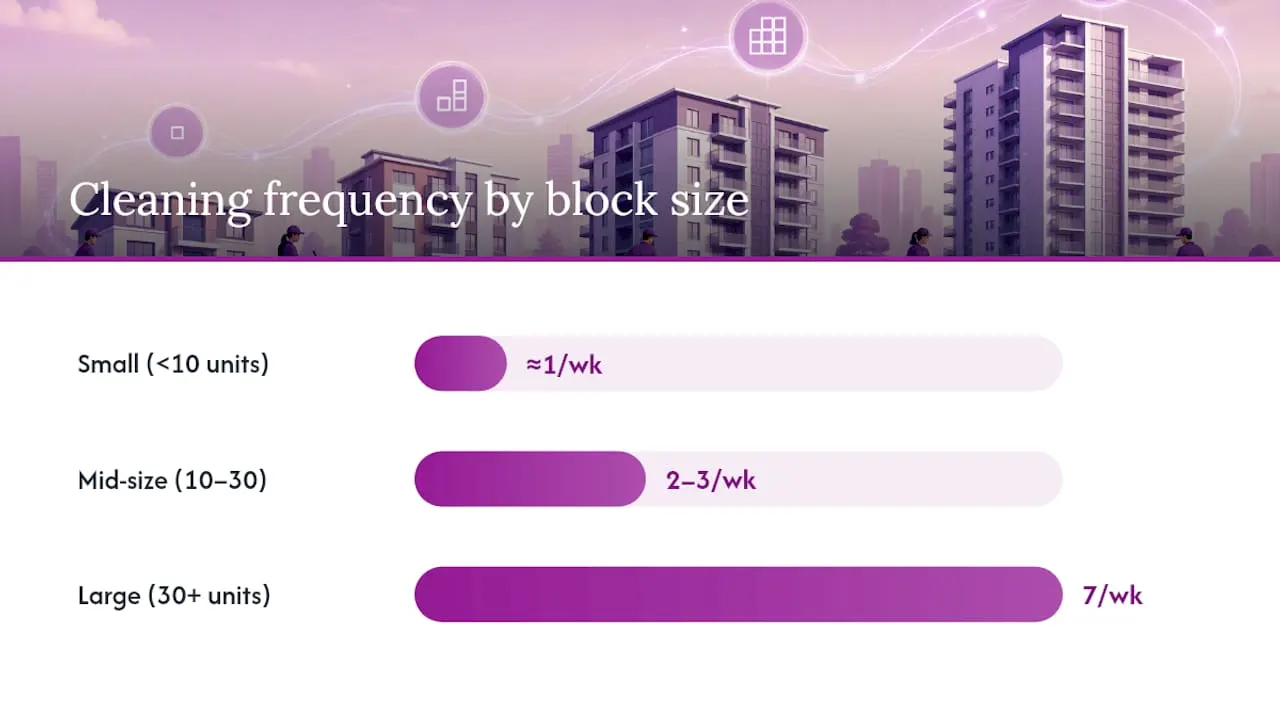
Frequency is not a single number. It is a tiered response to how many people walk through a space and how big that space is. A three-storey block with 8 flats generates a fraction of the foot traffic of a 15-storey tower with 120 units, and the high-rise specification used by Luton Council reflects that gap directly, with spot cleaning of lifts and lobbies scheduled seven days a week.
Mixed-use buildings need heavier ground-floor attention because retail footfall drags dirt into residential lobbies. Student lets and short-let heavy blocks push wear rates up regardless of unit count, and pet-owning households add mess in lifts and bin areas that a standard rota won’t catch. Winter months (grit, mud, leaf litter) typically justify a temporary frequency increase at entrances, especially when paired with durable window coverings like shutters for rental homes that reduce maintenance needs.
| Block profile | Baseline cleaning frequency | Deep clean cadence |
|---|---|---|
| Small (under 10 units, low footfall) | Weekly | Carpets and hard floors cleaned periodically throughout the year |
| Mid-size (10 to 30 units) | 2 to 3 times weekly | Carpets and lifts deep cleaned regularly throughout the year |
| Large or high-footfall (30+ units, mixed-use) | Daily, with frequent spot cleaning on lifts and lobbies | Carpets and floors deep cleaned regularly based on traffic |
Adjustments that push a block up a tier:
- Ground-floor retail or commercial units sharing the lobby
- A high proportion of short-let or student tenancies
- Documented pet ownership in a significant share of units
The low-rise Luton Council specification assigns fortnightly and monthly frequencies to specific internal tasks rather than treating cleaning as one blanket weekly visit, which is worth copying regardless of block size.
What should a communal cleaning specification actually say?
A specification that only lists “clean communal areas weekly” gives a contractor nothing to be held to. Every line needs a task, an area, a frequency, a measurable standard, and a verification method. That fifth column is what turns a vague promise into evidence you can produce at a tribunal.
| Task | Frequency | Measurable standard | Verification |
|---|---|---|---|
| Vacuum and mop hard floors and carpets | Daily to weekly (by tier) | No visible dust, debris, or wet patches on completion | Signed visit log |
| Wipe high-touch points (handrails, door plates, lift buttons) | Daily | Surfaces visibly clean and dry within 10 minutes | Photo evidence, timestamped |
| Internal glass and lobby doors | Weekly to fortnightly | Streak-free, no smears | Supervisor spot check |
| Bin store clean and disinfect | Weekly | No spillage residue, bins in designated position | Photo evidence |
| Disinfecting bodily spillages | Immediate, on report | Area disinfected within agreed response window | Incident log entry |
| Graffiti removal | Within 48 hours of report | Surface returned to prior condition or repainted | Photo before/after |
Deep-clean items (carpets, hard floors, lift interiors) belong on a separate rota with their own frequency line, and chute or hopper cleaning should never be bundled into the general communal spec. It needs its own rota because access, timing, and pest-control checks differ from routine cleaning.
Pro Tip: Ask any prospective contractor to quote against this exact five-column format before you sign anything. If they can’t produce measurable standards for each task, they can’t be held to them later.
What legal and compliance duties link to cleaning standards?
Cleaning is not just presentation. Several UK obligations turn hygiene tasks into legal ones.
- The Regulatory Reform (Fire Safety) Order 2005 requires common escape routes to stay clear of combustible material and obstructions, so cleaning logs that record corridor and stairwell checks double as fire-safety compliance evidence.
- HSE guidance on slips and trips sets out the timing, signage, and methods that reduce liability, including wet-floor warnings and correct dry times after mopping.
- Service charge law and RICS guidance both expect spend to be reasonable and documented, not just incurred.
- A written specification with dated invoices is the single strongest defence against a leaseholder challenging service-charge cleaning costs at tribunal.
Procurement documents used by councils, such as Slough Borough Council’s estates cleaning specification, require suppliers to provide cost breakdowns and mapped surveys precisely so this evidence trail exists from day one.
How do you verify cleaning quality is actually being delivered?
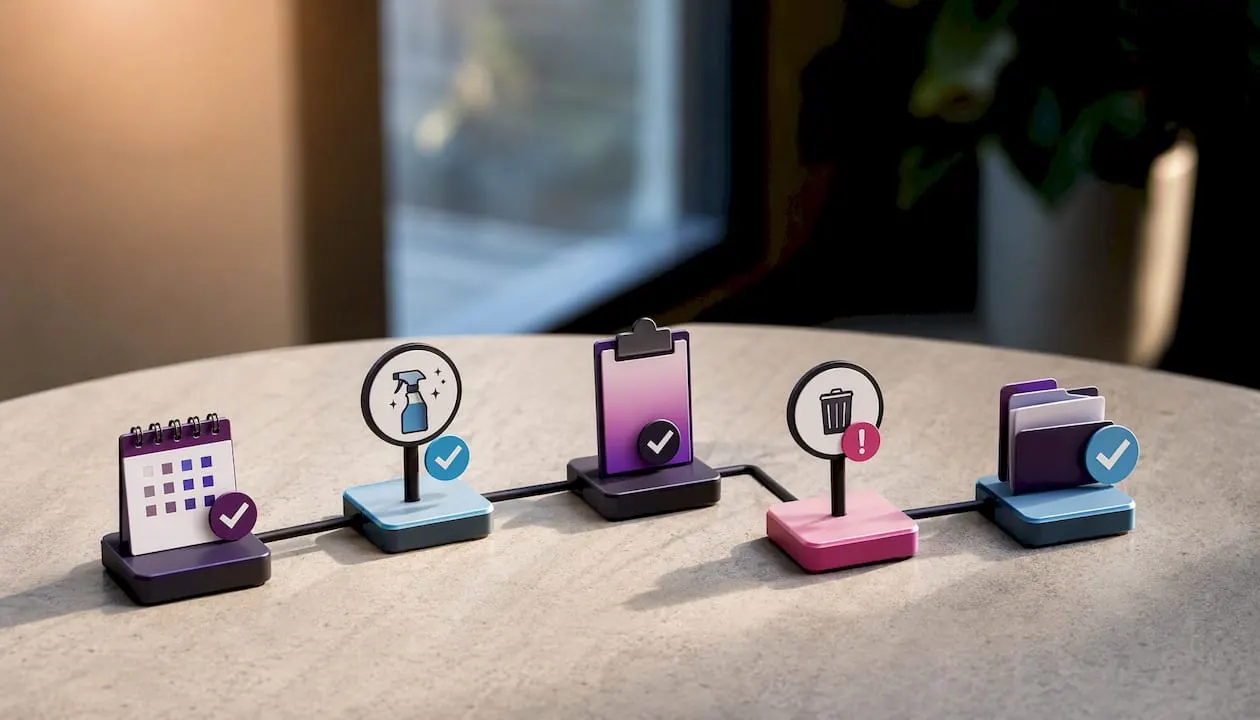
Inspection scoring beats waiting for complaints. A structured system tracks the same categories on every visit: floor condition, high-touch surface cleanliness, restroom standard where applicable, waste area condition, and overall presentation, an approach practitioner guidance on property cleaning standards recommends specifically because it surfaces recurring patterns rather than one-off gripes.
Your minimum verification toolkit should include:
- Signed visit logs with timestamps
- Photographic reporting for high-touch and bin store tasks
- Periodic unannounced supervisor visits
- A resident feedback channel that logs and timestamps issues
Set response-time targets against urgency. Spillages and bodily fluid incidents need same-day response; pest signs in bin stores warrant 24-hour investigation; blocked chutes should be cleared within 48 hours to avoid odour and pest escalation.
What does a weekly rota and mobilisation checklist look like?
A rota only works if it is specific enough to hand to a new contractor on day one.
- Daily: lobbies, lifts, and high-touch points (handrails, door plates, buttons)
- Weekly: corridors, stairwells, communal windows, and a full bin store check
- Fortnightly to monthly: exterior paths, communal garden tidying, light fixture dusting
- Quarterly to biannually: deep cleans of carpets, hard floors, and lift interiors
- Ongoing: bin store and chute maintenance with scheduled pest checks
When mobilising a new contractor, survey the block first, map every communal area against the lease, run a trial week against the specification, then set that week’s results as your audit baseline. A zone-based scheduling approach built for commercial buildings adapts well here, because it forces you to separate high, medium, and low-traffic zones rather than treating the whole block as one job.
How SeaLight Shine applies these standards across East Anglia
We were built around one problem commonly reported by landlords and estate agencies: cleaners who were unreliable or inconsistent. Every block receives the same measurable standard regardless of the client type, such as landlords, short-term rental hosts, or estate agencies managing multiple properties. Professionalism and punctuality are core values that motivate the business.
Kate
Get a specification and audit trail built for your block
Getting these standards written down is one thing. Getting a contractor who delivers against them every visit, with the photo evidence and signed logs to prove it, is another. This service offers an alternative to unreliable one-off cleaners by using fixed specifications, mapped rotas, and photo reporting that can be used for tribunals or leaseholder queries.
Our deep cleaning service covers the carpet, hard floor, and lift-interior work that sits outside a routine rota, while our communal area and floor cleaning packages handle the daily and weekly tiers this article sets out. For blocks needing a full contractual arrangement with audit reporting, our commercial cleaning contracts build the specification and verification toolkit into the agreement from the start. Request a site survey and we’ll map your block, propose a tiered rota, and quote against a written specification you can put straight into your service-charge budget.
Sources
- Detailed cleaning specification | High rise block (Luton Council)
- Estates cleaning specification (Slough Borough Council procurement document)
- Regulatory Reform (Fire Safety) Order 2005
- HSE guidance on slips and trips
- RICS guidance
FAQ
What is block management in the UK?
Block management is the day-to-day administration of a residential building’s communal areas and shared services, funded through leaseholder service charges and typically overseen by a managing agent or resident management company.
What are the 5 basic cleaning principles?
Definitions vary across the industry, but most UK specifications build around clear task definitions, set frequencies, measurable standards, verification evidence, and defined response times for urgent issues.
What are the legal obligations of a property management company?
Property managers must keep fire escape routes clear under the Regulatory Reform (Fire Safety) Order 2005, manage slip and trip risk per HSE guidance, and ensure service-charge spending, including cleaning, is reasonable and documented under RICS-aligned practice.
Do landlords need to professionally clean between tenants?
There’s no single blanket legal requirement for professional cleaning between every tenancy, but a documented, reasonable clean protects landlords in deposit disputes and supports evidence for deposit deductions related to cleaning.