Schools & education
Only 3–4 usable weeks? A school holiday deep clean plan for UK schools
By SeaLight Shine10 min read
A school holiday deep clean resets the building’s hygiene baseline using industrial cleaning methods that simply aren’t possible during term time, covering everything from floor stripping to kitchen degreasing while pupils and staff are away. The first move is practical, not procedural: confirm your exact available holiday weeks, then decide whether to book professionals or manage the work in-house, following Gov.
TL;DR:
- Booking a deep clean 12 to 20 weeks in advance is essential to secure quality contractors and avoid last-minute compromises.
- The usable cleaning window is often only three to four weeks, after subtracting INSET days, setup, and admin tasks during the holiday.
- A comprehensive checklist covers zone-specific tasks, including deep dusting, floor stripping, kitchen degreasing, and external pressure washing, tailored for each area.
- Routine disinfectant use is usually sufficient, reserving strong disinfectants for high-risk incidents, with proper COSHH documentation required from contractors.
- Costs vary based on floor area, surface type, kitchen inclusion, and required equipment, with detailed, itemized quotes and site surveys highly recommended.
How to plan a school holiday deep clean schedule
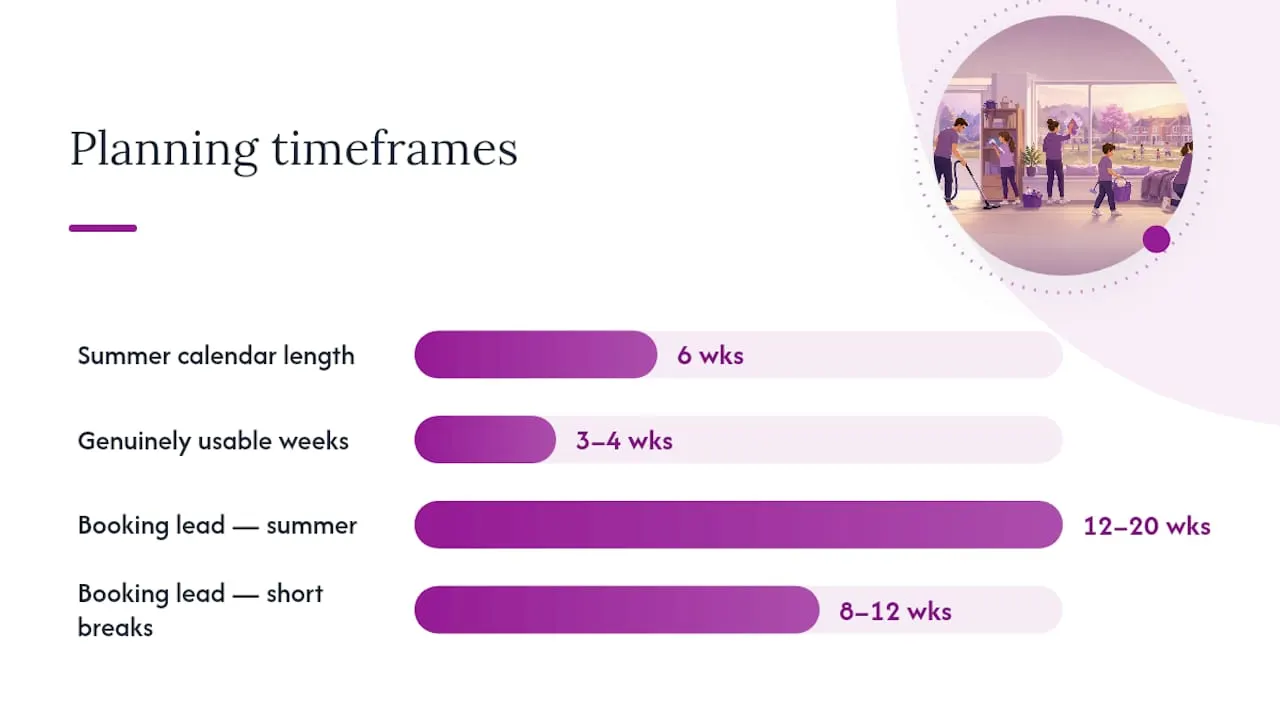
Start by working out your real usable window, not the calendar one. A six-week summer break rarely gives you six clean weeks. INSET days, classroom setup, admin tasks and the final week before term all eat into your total, so subtract those first and plan around what’s left. Many facilities teams discover they only have three or four genuinely free weeks even in the longest holiday.
Booking lead time matters more than most schools budget for. Professional cleaning teams recommend securing summer holiday slots 12 to 20 weeks ahead, and at least 8 to 12 weeks for shorter breaks like October half-term or Easter. Leave it too late and you’ll be choosing from whoever has spare capacity, not whoever does the best job.
Sequencing also decides how much value you get from the clean. Any dusty repairs, painting or maintenance should happen before the deep clean starts, never after, or you’ll pay for a clean that’s undone within days. Arrange skip hire or waste removal in advance too, so contractors aren’t waiting around for bins.
Before confirming a contractor, ask for:
- COSHH data sheets for every product they intend to use
- Proof of insurance and staff training records
- A written, zone-by-zone checklist showing exactly what’s included
- A formal sign-off process once work is complete
Pro Tip: Get your booking confirmed before the last INSET day of term. Contractors get snapped up fast for the popular weeks, and a rushed last-minute booking usually means a smaller team and a shorter visit than you actually need.
What should a full deep clean checklist cover?
A proper holiday deep clean works zone by zone, and each area needs a different level of attention. Here’s how it typically breaks down across a school site:
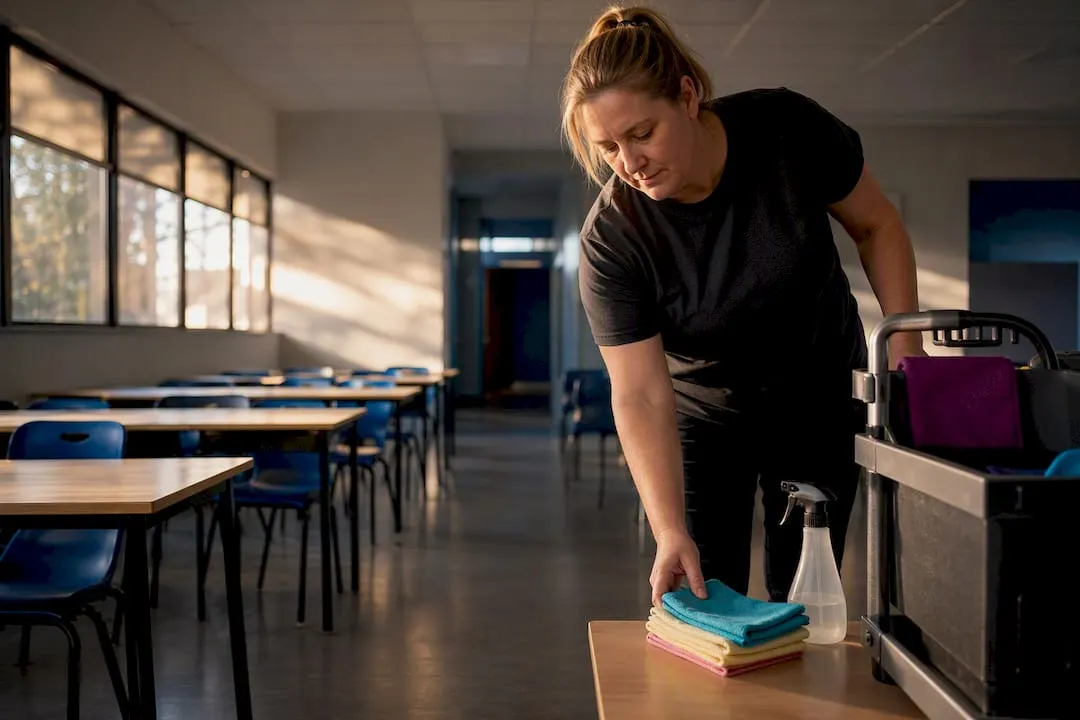
- Classrooms: full dusting from ceiling to floor, undersides of desks and chairs, upholstery extraction on soft seating, window ledges, skirting boards and radiator surfaces.
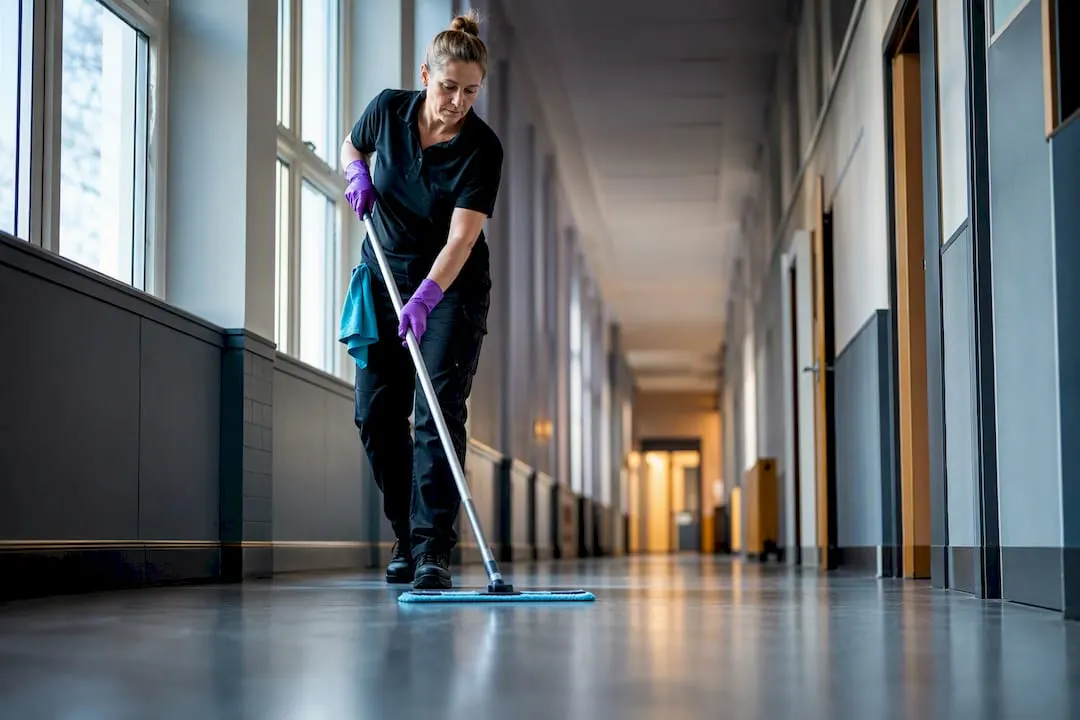
- Corridors, reception and assembly halls: machine scrubbing of hard floors, stripping and repolishing where finish has worn thin, and high-level dusting of light fittings and pipework.
- Sports halls and changing rooms: specialist floor machine care suited to sprung or vinyl surfaces, sanitising of shared equipment, and a proper ventilation clean to shift trapped moisture and odour.
- Kitchens and catering areas: degreasing of extraction hoods and canopies, cleaning behind and under heavy equipment, and food-safe sanitisation of all prep surfaces. This is one of the more specialist jobs on the list, and our commercial kitchen deep clean guide for East Anglia covers what’s typically involved.
- Washrooms: limescale removal, grout cleaning in tiled areas, and clearing extractor vents that get clogged over a term.
- IT suites and equipment: careful dust removal from vents, fans and keyboards using dry methods only. Liquids near electronics are a hard no.
- External areas and entrances: pressure washing to shift algae, moss and grime build-up on paths, ramps and steps.
Effective deep cleaning removes the abrasive soil and bacterial build-up that protects furniture and flooring from long-term wear, which is exactly why floor stripping and upholstery extraction pay for themselves over a few years rather than being a one-off cosmetic job. Flag anything needing industrial floor machines, hot-water extraction, or trained operatives clearly when requesting quotes. If you’re setting your own scope before calling anyone, our classroom cleaning checklist is a useful starting template.
Is it safe to disinfect a school without harming children?
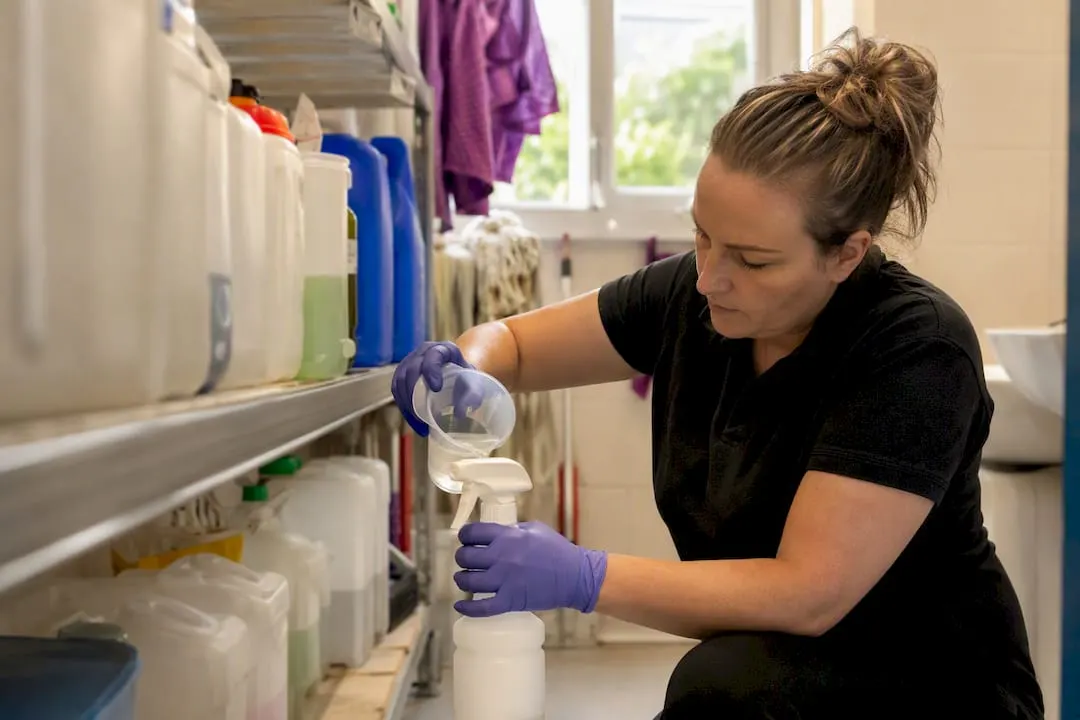
Insist on COSHH data sheets for any hazardous product, along with evidence that whoever’s using them has actually been trained to do so. This isn’t box ticking. Children can react more strongly to chemical residues than adults, so the products and process matter as much as the results.
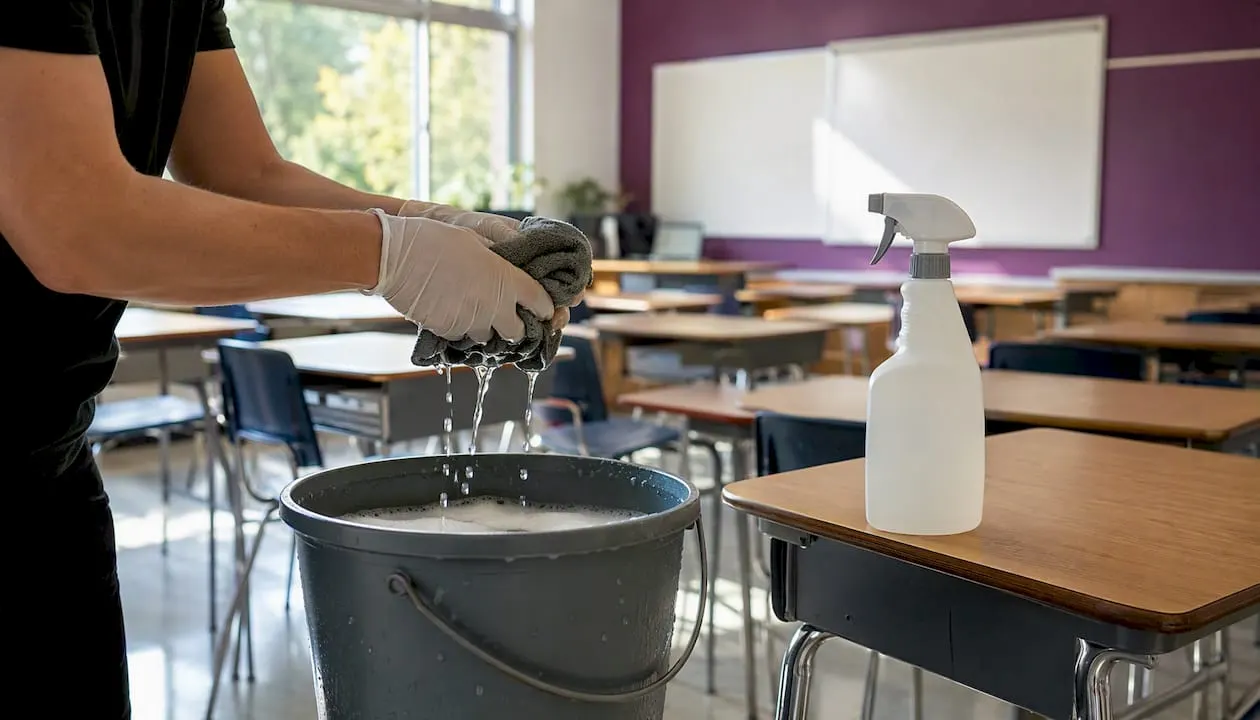
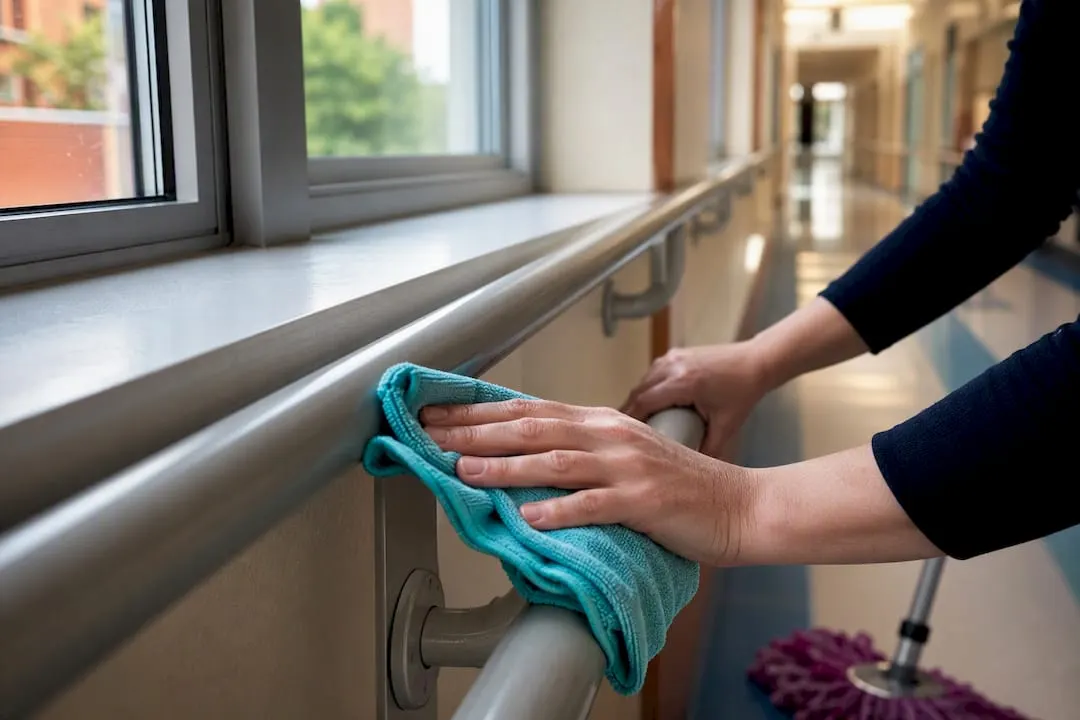
Routine cleaning with good microfibre cloths and mops is generally sufficient for most surfaces. Physical scrubbing with detergent removes the vast majority of microbial load without needing heavy disinfectants at all. Save disinfection for genuine higher-risk situations: body-fluid incidents, or a specific outbreak response following public health advice.
Where possible, choose third-party-certified, lower-VOC products. They clean effectively while reducing the chemical load in spaces children will occupy
Basic safe-working practice includes:
- Full ventilation of any room after chemical treatment
- Keeping children off treated floors or surfaces until completely dry
- PPE (gloves, and eye protection where relevant) for anyone handling concentrated products
Requesting a full COSHH breakdown before work starts isn’t optional if you’re the person accountable for the building. Our guide on COSHH for school cleaning sets out exactly what UK schools should be asking contractors for.
How long does a school deep clean take and what does it cost?
The single biggest budgeting mistake is assuming you have more time than you do. A large school might have the full holiday on paper, but once you strip out INSET days, admin weeks and classroom setup, you’re often down to three or four usable weeks, and that shapes everything about scope and cost.
What actually drives the price on a quote:
- Floor type and total floor area (hard floor stripping costs more than routine mopping)
- Whether kitchens or catering areas are included, given the specialist degreasing involved
- Volume of soft furnishings needing extraction cleaning
- Number of teams and shifts required to hit your deadline
- Waste removal, skip hire and machine hire
A solid quote itemises these separately rather than giving one lump figure. If a contractor won’t break down what’s included zone by zone, treat that as a warning sign, not a convenience. Our guide to UK school cleaning costs gives a clearer sense of what to expect regionally.
Should you DIY the clean or bring in professionals?
Some tasks genuinely suit a DIY approach if you’ve got willing staff or parent volunteers over a shorter break:
- Microfibre wiping of touchpoints: door handles, light switches, handrails
- Desk and surface wiping, spot-cleaning marks and scuffs
- Bagging and clearing general waste and clutter
- Basic vacuuming of carpeted areas
Other jobs need professional equipment and training, full stop: floor stripping and repolishing, hot-water carpet and upholstery extraction, industrial kitchen grease removal, and any high-level reach cleaning above normal ladder height.
Pro Tip: If you’re weighing up scale against your available time, staff and equipment, and you’re not certain your team can safely handle COSHH-controlled products, hire professionals. A half-finished deep clean is worse than a well-planned smaller one.
Keeping standards up until the next holiday
A deep clean only holds its value if someone checks it worked. Before staff and pupils return, walk the site with your checklist and confirm every zone was actually completed to the standard agreed, not just ticked off on an invoice. Photograph problem areas (grout lines, extraction hoods, high-level dust) so you’ve got a clear record if a follow-up visit is needed.
Once term starts, the deep clean’s benefit fades fast without routine maintenance behind it. Daily touchpoint cleaning, weekly floor care in high-traffic corridors, and a scheduled midterm check on washrooms and kitchens all keep the reset from unravelling within a few weeks. Facilities teams who treat the holiday clean as a one-off, rather than the start of a maintained standard, tend to find hygiene levels drop back to baseline by half-term.
It’s worth building a simple maintenance calendar straight after the deep clean while the scope is still fresh in everyone’s mind: what got done, what needs revisiting at October half-term, and which areas (kitchens, sports halls, washrooms) need more frequent attention than others. This turns one good clean into a sustained standard rather than a single expensive event that quietly degrades.
If soft furnishings or rugs featured in the deep clean, ongoing care matters too. Specialist rug and upholstery care guidance is useful for keeping those surfaces in the same condition the deep clean left them.
What tips help you manage cleaning staff or helpers?
If you’re coordinating your own team, whether that’s caretaking staff, contracted cleaners, or parent volunteers for a smaller job, clarity beats enthusiasm every time. Give each person a written zone and task list rather than a verbal run-through; holiday cleans move fast and memory fills in gaps incorrectly.
Break the work into short, visible wins. A team ticking off completed classrooms one by one stays motivated in a way that “clean the whole school” never achieves. Set realistic daily targets based on your actual usable weeks, not the full calendar break, and build in a buffer day near the end for snagging.
Rotate the harder physical tasks, like floor machine work or heavy lifting, so no one burns out halfway through the window. And make sign-off a two-person job wherever possible: whoever cleaned a zone shouldn’t be the only one checking it’s actually done to standard. That small step catches more missed detail than any checklist alone.
What SeaLight Shine sees on real East Anglia school jobs
The most common issue we come across is bookings made too close to the holiday, leaving no room for proper sequencing with other maintenance. Missing COSHH paperwork is the next biggest headache, usually from smaller contractors cutting corners on documentation. Our practical advice: lock in your dates early and run a short site survey first, so the scope is agreed before anyone picks up a mop.
Kate
Book your school holiday deep clean with SeaLight Shine
A professional cleaning company should handle the full scope of a school holiday deep clean, starting with a proper site survey rather than a guessed quote. That matters because vague pricing usually means someone underestimated the kitchen degreasing or the floor stripping until they’re halfway through the job, and the school ends up paying for the shortfall.
Quotes should break down by zone, so you can see what’s included in classrooms, kitchens, washrooms and sports halls before you commit. Reliable contractors supply full COSHH data sheets for every product used, along with evidence of staff training. Effective teams work to sequencing that protects the result: repairs and painting first, machine floor care last.
If your school has previously struggled with contractors who missed deadlines or left work half finished, our school cleaning services in Colchester page has more detail on how we run these jobs across East Anglia. To get your holiday window mapped out properly, book a deep clean survey with our team before your preferred dates fill up.
FAQ
How far in advance should I book a school holiday deep clean?
Book summer holiday deep cleans 12 to 20 weeks ahead, and shorter breaks like half-term at least 8 to 12 weeks ahead, to secure your preferred dates and avoid rushed work.
Do schools need to disinfect every surface during a holiday clean?
No. Routine cleaning with microfibre is generally sufficient for most surfaces; disinfectants should be reserved for body-fluid incidents or specific outbreak response situations.
What paperwork should I ask a school cleaning contractor for?
Ask for COSHH data sheets covering every product used, proof of insurance, evidence of staff training, and a written zone-by-zone checklist with a formal completion sign-off.
Can parents or school staff do the deep clean themselves?
Basic tasks like touchpoint wiping, desk cleaning and vacuuming suit DIY, but floor stripping, upholstery extraction and kitchen degreasing generally need professional equipment and COSHH-trained operatives.
How much does a school holiday deep clean typically cost?
Cost depends on floor area, floor type, whether kitchens are included, the number of teams required and waste removal needs. Professional cleaning companies often provide a site survey and itemised quote for each school before work begins.